
How Meriden Residents Are Found
A useful search begins with the piece of information already in hand. An address points first to the Meriden Assessor and GIS parcel layer. A person’s name may fit the Connecticut Judicial Branch, the voter system, a license record, or the City Clerk’s land index. That is how a Meriden residents directory search becomes a set of checkable records instead of one unverified name.
No single roll is a complete list of people in Meriden. An assessment card names an owner or mailing contact, not every person at the parcel. A directory identifies a listed resident in a publication year, not legal title. A court result shows a public case connection, not a person’s home or conduct. Use two independent anchors, such as a name plus a parcel, or a street plus a year, before treating records as a likely match.
- Search the Meriden Vision assessment database by address, owner, account, MBLU, or PID when a parcel is known.
- Use the Connecticut Secretary of the State’s voter lookup or contact the Meriden Registrars for election-related context.
- Move from the parcel or name to the Meriden land-record index and compare deeds, liens, maps, and legal descriptions.
- For an earlier household, search the Meriden Public Library’s 1868–1992 directory run, newspaper film, census, and local indexes.
- When an online result is missing, ask the custodian for a counter inspection, copy route, archive referral, or Connecticut FOI request.
Meriden’s Resident Records Desk
Connecticut has no current county clerk or county seat. New Haven County is a geographic and historical label, not the office that issues a Meriden deed or marriage copy. The working chain starts with Meriden departments and then moves to state courts, state vital records, or local archives. For a Meriden residents directory search, the City Clerk is the key local counter for land instruments and vital statistics; the Assessor and Registrars answer different questions about property and elections.
Meriden City Clerk
142 East Main Street
Meriden, CT 06450
203-630-4030
Land, vital, and public-record services
Meriden Assessor and GIS
Municipal assessment and parcel systems
Meriden, CT
Use the city’s published office route
The City Clerk page also routes readers to the land index, property-alert service, copy rules, and the city’s OpenGov FOI shell. A request should name the record, date range, address, or instrument number. It should not ask a department to assemble a private profile.
See the Meriden City Clerk’s official records page for the office’s current contact and service routes.
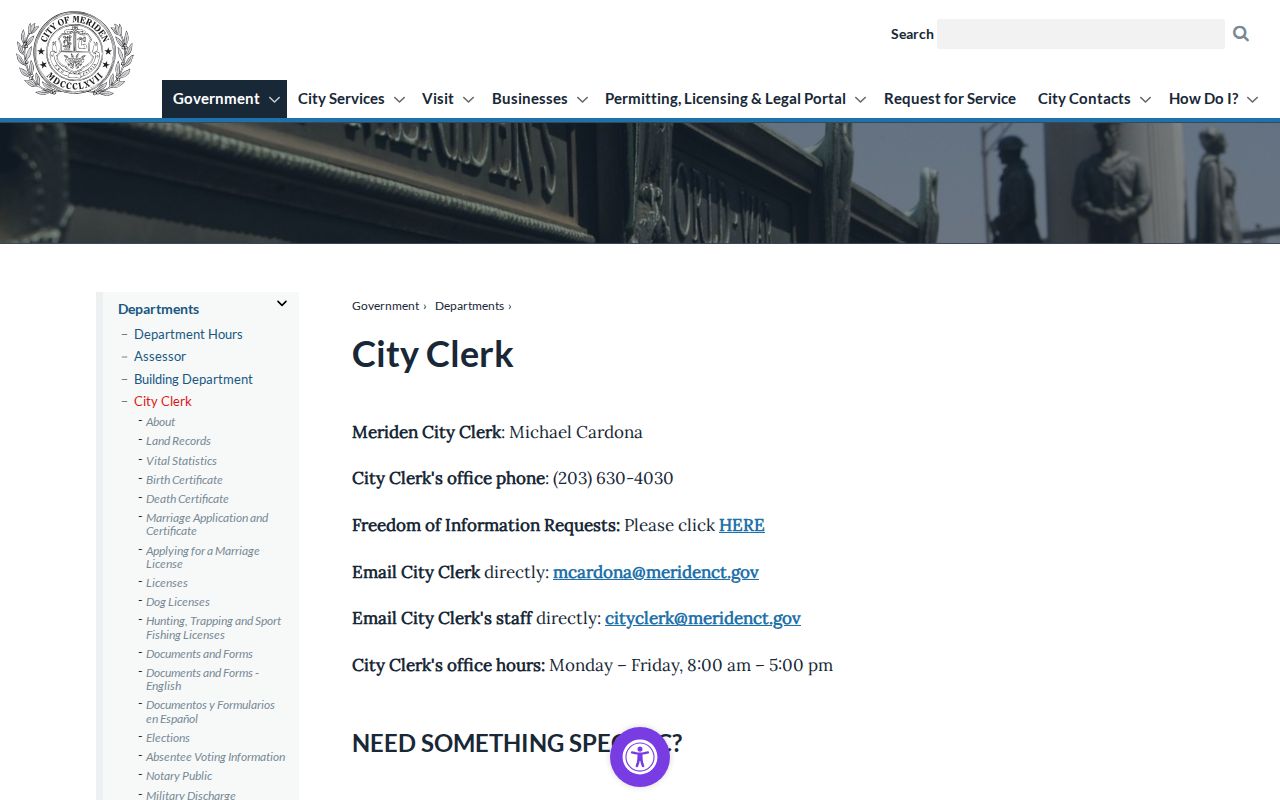
The City Clerk image anchors the local records desk in the office that holds Meriden land and vital records, rather than in a county office that does not exist.
Meriden’s Parcel-to-Owner Shortcut
The quickest current lead for a Meriden residents directory search usually comes from the City-linked Vision database or the GIS Property Viewer. Vision accepts an address, owner, account number, MBLU, or PID. The older Meriden search has a different strength: leave the number blank, enter a street, and inspect every visible property row. That makes it useful for a street sweep even though its controls do not expose a direct owner-name or ZIP-wide search.
A parcel card can show the situs, owner fields, billing address, parcel ID, sale date, book and page, building data, and valuation history. Those fields orient a records search. They do not prove who occupies the building. The GIS disclaimer also says the map is representative rather than survey-grade. Use its parcel identifiers and legal clues to reach the City Clerk’s recorded instrument, which is the better source for title.
The capture below comes from the official-linked Vision search route. It shows the search choices that make a name, address, or parcel number useful starting points for Meriden research.
Open the Vision Government Solutions property search to compare its search modes with the city GIS route.
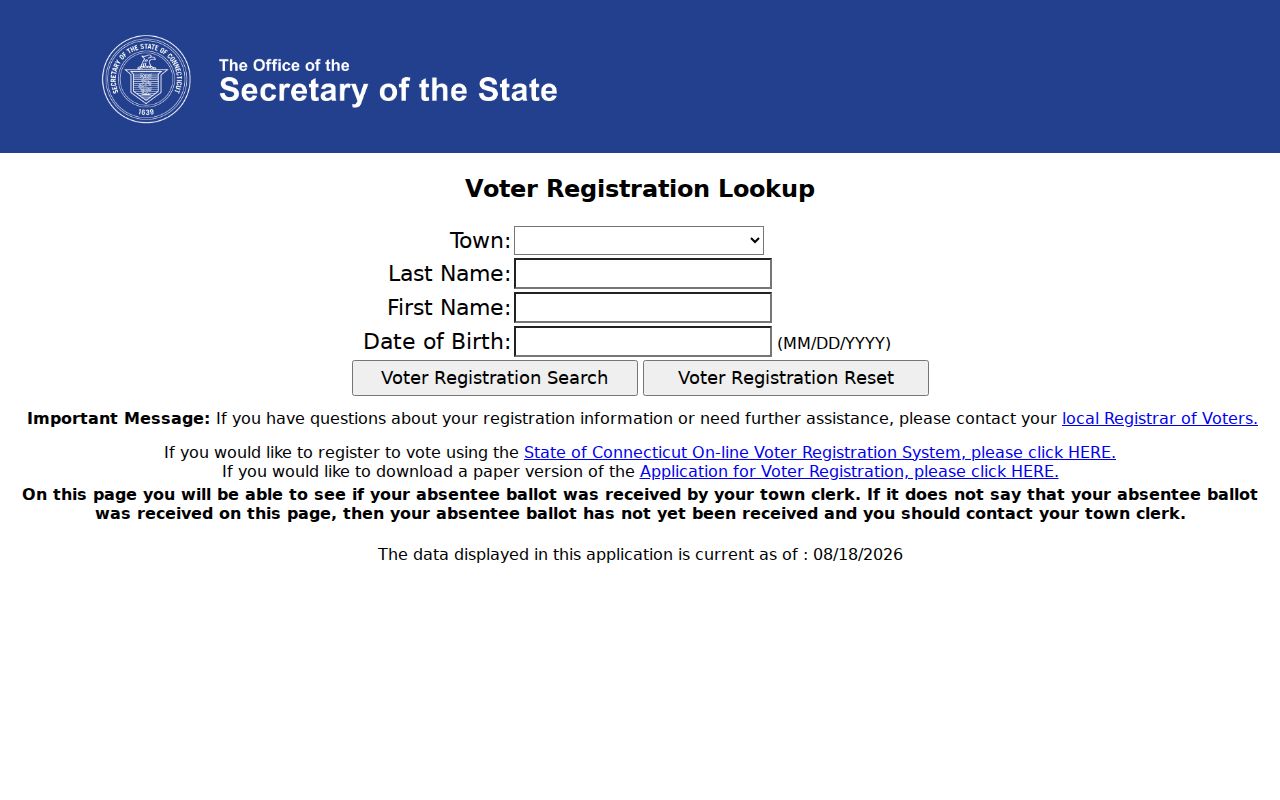
The result is an owner and property lead. Follow it with the deed index, a court or voter cross-check, and a dated note about what each source actually confirms. That handoff keeps a Meriden residents directory from treating a tax row as a full household record.
| Search control | What it does in Meriden |
|---|---|
| Address | Finds a situs or property address in the Vision assessment system. |
| Owner | Searches the owner field when the current database exposes the name. |
| Acct# | Uses the assessment account number as a stable parcel clue. |
| MBLU | Uses the map, block, lot, and unit format shown by the database. |
| PID | Uses the parcel identifier for a direct card lookup. |
What a Meriden Voter Check Can Tell
Connecticut’s voter system answers an election question, not a broad household question. The Secretary of the State links to an “Am I registered?” lookup, while the Meriden Registrars maintain local lists and district information. Ordinary public voter fields can include a legal name, address, district, party affiliation, status, and election participation history. Month and day of birth are not released in the current public file, and a ballot choice is never a directory field.
The state’s centralized voter file is a separate route. SOTS describes a statewide CSV request costing $300, with requester details, payment, delivery format, and a use certification. The form limits access to election-related, scholarly, journalistic, political, or governmental purposes. It bars marketing, solicitation, harassment, and private commercial use. A person who needs a polling place or district should use the local street lookup instead of treating the full file as a resident list.
The official lookup target was not available for a live field capture during research. A non-match can reflect a spelling issue, list maintenance, protected status, or the timing of the data. It is not proof that someone never lived in Meriden.
Visit the Connecticut voter lookup target for the current form and message shown at search time.
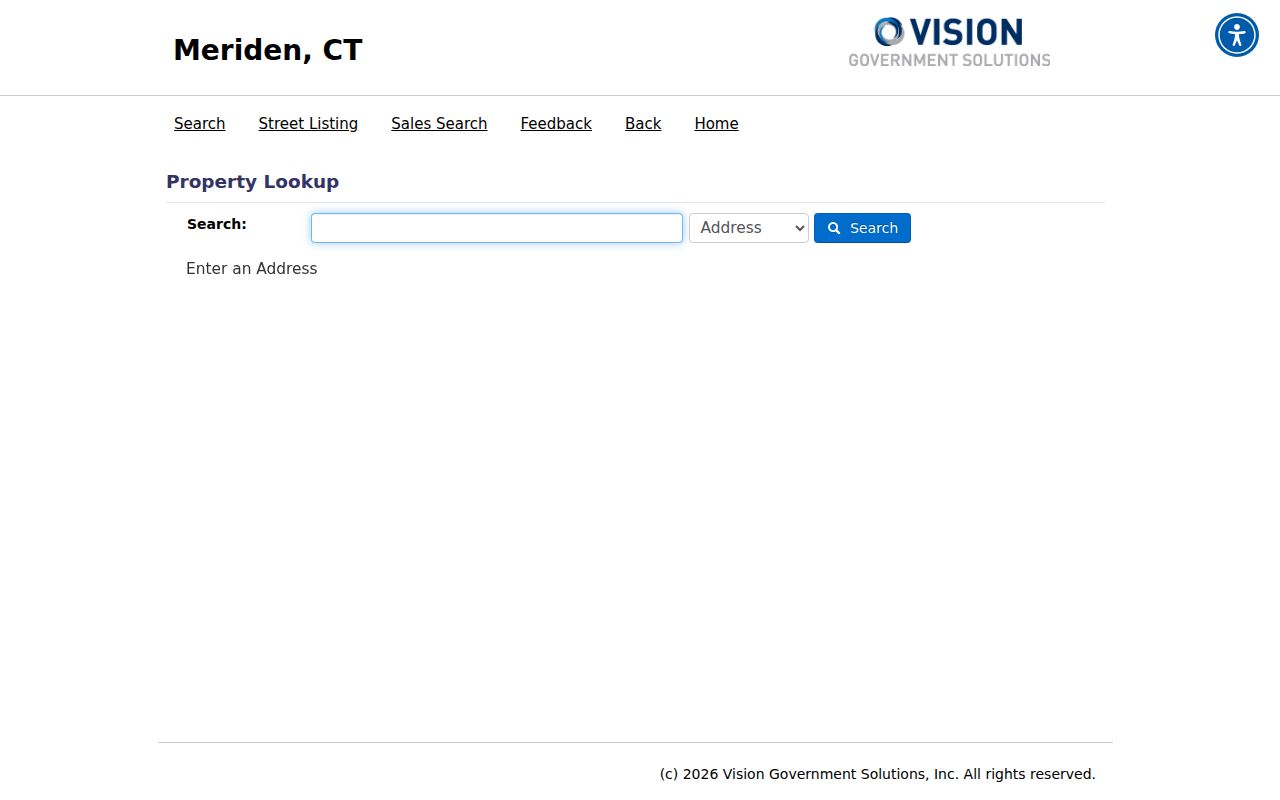
The image points to the state route. For a local district question, the Meriden voting information page and Registrar contact are the safer next step in a Meriden residents directory search.
Meriden’s Free Property Alert
Meriden’s Property Alert is a recent land-record tool with a narrow purpose. A person creates and activates an account, adds an exact party-name variant, and receives an email when a matching verified Meriden land record is recorded. It can warn about a new filing, but it is not a history of ownership and it does not list everyone connected with a parcel.
Names should be entered with care. Similar names can create false positives, and an entity, trust, or alternate spelling can split a trail across several alerts. When a notice arrives, use its instrument details to check the City Clerk’s land index, then request the record or certified copy from the custodian. The alert is a notice layer, not a substitute for the deed image or legal description.
The land-record route is also a reminder about access. The City advertises free searching, but the inspected NewVision client required authentication for anonymous access and restricted some images and printing. The online back-year was not exposed. If the portal stops at login or gives no image, ask the City Clerk about paper or digital volumes.
Read Meriden’s land-record and property-alert information before relying on a mailed notice or paid copy offer.
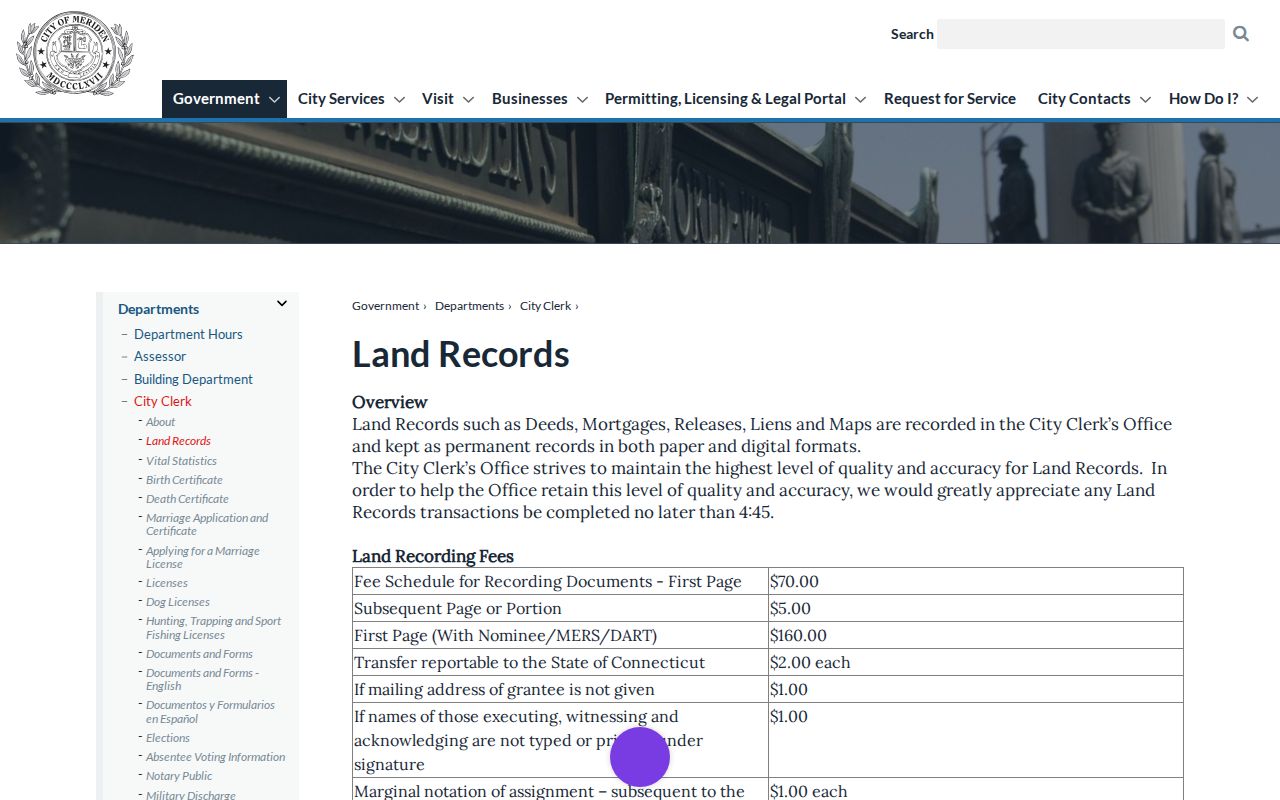
The land-record screenshot belongs beside the alert workflow because both point to the same official custodian, while only the recorded instrument can establish the legal transfer. That distinction matters whenever a Meriden residents directory search starts with a notice rather than a deed.
Current Meriden Resident Directories
Meriden’s current people and address sources divide the work among offices. The property layer identifies recorded ownership and tax correspondence. The voter layer identifies election registration in a controlled legal setting. The land index records parties to instruments, while the city staff list is limited to public employees and officials. Neighborhood groups supply civic geography, not member rolls.
| Source | Who It Lists | Keeper | Access |
|---|---|---|---|
| Vision assessment and GIS | Owner fields, parcels, mailing clues | Meriden Assessor/GIS | Public web search |
| Voter registration | Registered names, district, party, participation fields | Meriden Registrars and SOTS | Election-law limits |
| NewVision land index | Grantors, grantees, liens, maps, and other instrument parties | Meriden City Clerk | Index, copies, image limits |
| Employee directory | Named city staff and department contacts | City of Meriden | Free public page |
| Neighborhood Council | Group names, area terms, meetings, newsletters | Meriden neighborhood office | No member roll shown |
The differences matter. An owner may have a mailing address outside the city, while an occupant may not appear on the card. A voter record can show registration context but does not disclose a ballot choice. A deed can show a transfer without showing who lives at the property. The Meriden resident lookup workflow is the better path when the goal is one person and the evidence must be compared across systems. It keeps a Meriden residents directory grounded in the source that actually answers the question.
Meriden Vital Records Have Two Routes
Birth, death, and marriage searches split between the Meriden Registrar or City Clerk and the Connecticut Department of Public Health Office of Vital Records. A local request is often the practical first route for a Meriden event. DPH holds statewide records from July 1, 1897 forward, but state processing can take up to twelve weeks and its forms, payment, and identity rules differ from the town process.
Modern birth records are the clearest access boundary. Under Conn. Gen. Stat. §7-51, a birth record younger than 100 years is limited to listed eligible people and entities, with photo ID and relationship proof when required. A record at least 100 years old is open to anyone. Adult requesters can generally obtain death certificates, but Social Security number information is limited to specified family or informant categories. Marriage and civil-union copies are generally available to adults, with Social Security numbers limited to the parties. Divorce decrees belong to Superior Court, not DPH.
The local and state forms also carry different fees. The research record lists local birth wallet and full-copy amounts, local death and marriage copies generally at $20, and DPH state copies at $30 for birth and $20 for death or marriage. Borderline birth years should be checked with the registrar because the local page and Permitium wording do not match perfectly.
Review Connecticut’s vital-record custody map before choosing a form.
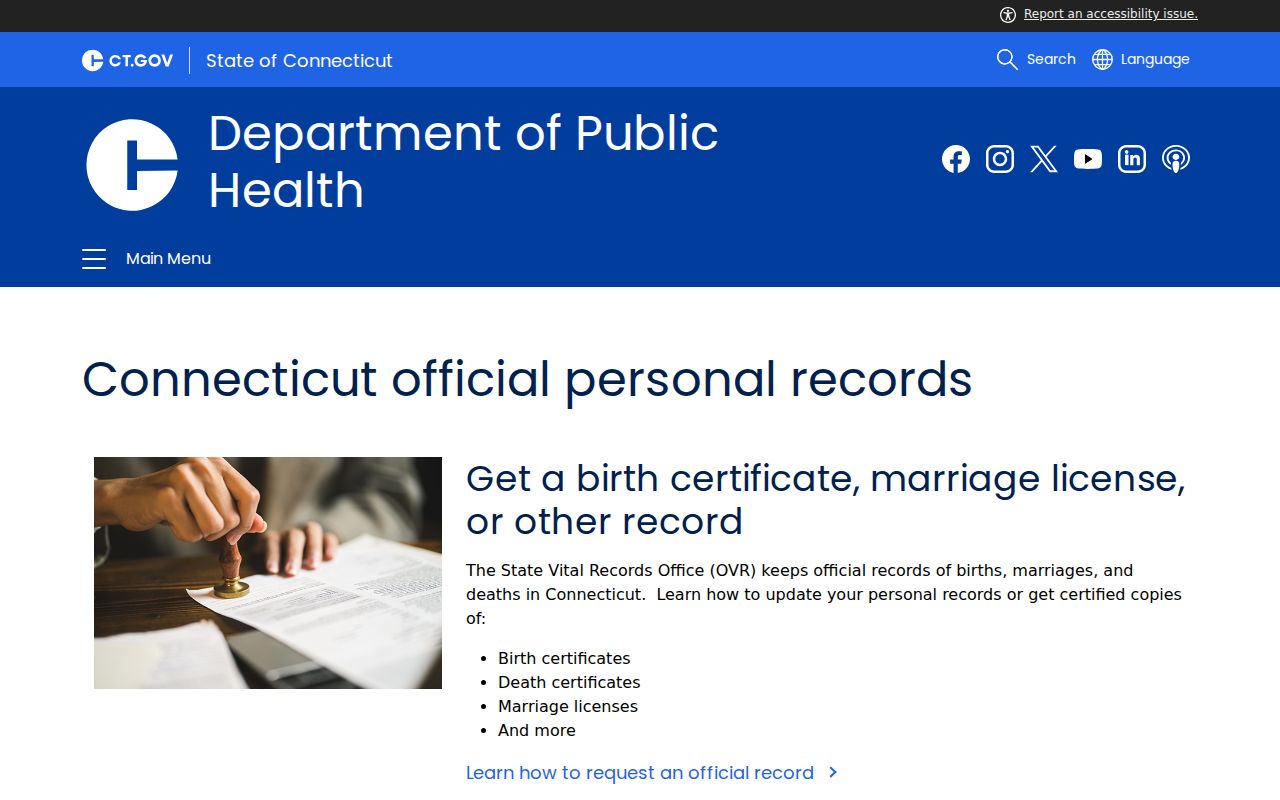
A vital-record index can supply a family clue, but only an eligible custodian can issue the certificate and its restricted fields. The same rule applies when a Meriden residents directory search points toward a birth or marriage record.
Choose the Meriden Court Search
Meriden cases sit in the Connecticut Superior Court’s Judicial District of Meriden and Geographical Area 7, not in a city municipal court. The civil inquiry portal covers civil, family, small-claims, legal-notice, and foreclosure modes. A different Judicial Branch portal handles criminal and motor-vehicle searches. The split matters because the forms, location codes, categories, and retention rules are not the same.
In the civil party search, last name is required. First name, location, category, type, name-match mode, and sort order can narrow the result. Meriden’s location code is NNI. The property-address form asks for a city or town, accepts a partial street, and offers ZIP, property type, and case-status filters for the foreclosure and summary-process route. It indicates Meriden address cases from 2014 onward, so it is not a complete address census.
A result can show a case name, docket, filing and return dates, last action, disposition, party or appearance information, motions, pleadings, documents, and scheduled events. Public display is not a certified file. Sealed, erased, juvenile, protected, and older matters may not appear. Use the clerk or Court Service Center when the result is important or the web display is thin.
Open the civil party-name form for the current controls and location choices.
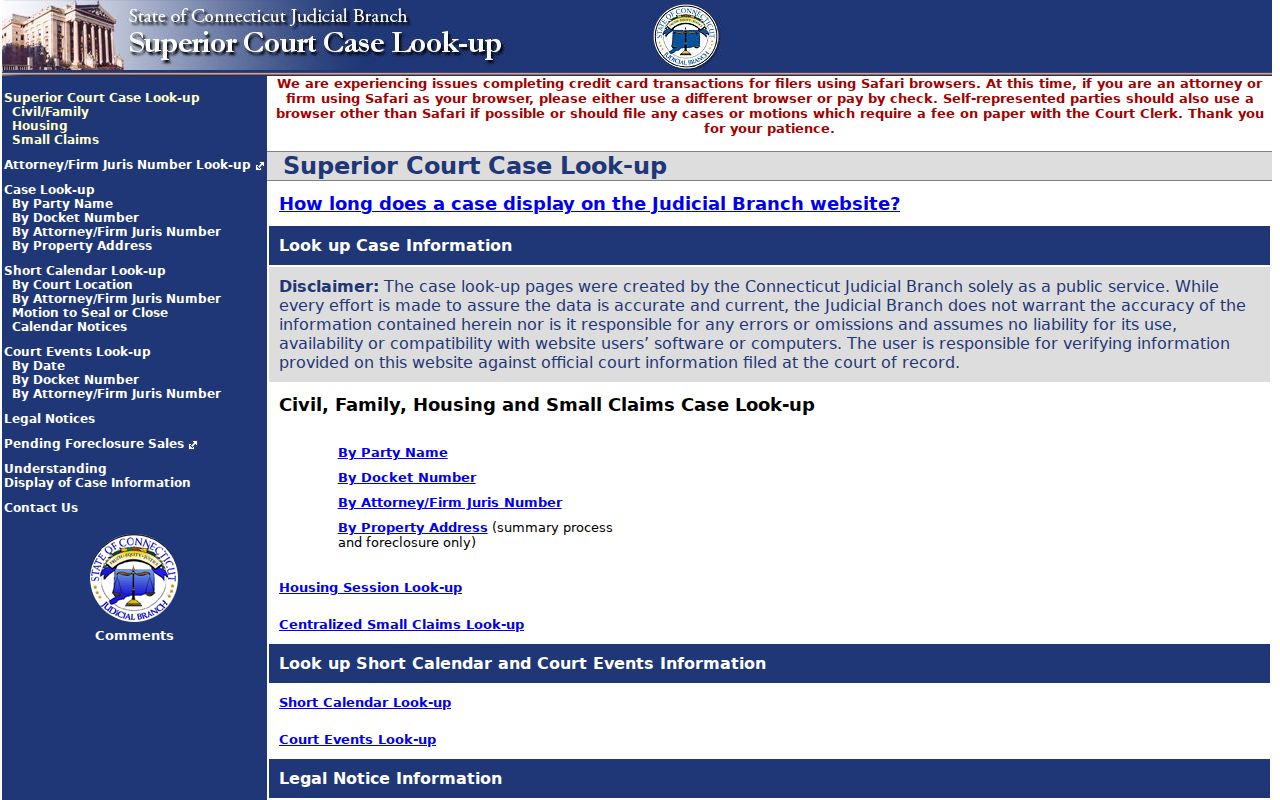
The court image shows a search route, not a finding about any person. Read the docket and the custodian’s limits before drawing a conclusion about a Meriden residents directory result.
Use the Meriden Room Before Guessing
The Meriden Public Library is the best local bridge between current systems and older households. Its second-floor Meriden Room is appointment-only, and the materials do not circulate. Researchers can work during open hours with the library’s local history and genealogy staff. The listed contacts can identify a directory year, newspaper reel, vertical file, or map before a trip is planned.
The collection combines sources that answer different parts of a name search. City directories cover residents, streets, and businesses from 1868 through 1992. Newspaper microfilm spans 1863 through 2020, while the library page identifies Newspapers.com access back to 1868. Sanborn maps cover 1884 through 1950, census microfilm covers 1790 through 1930, and the Barbour index covers Meriden vital statistics from 1806 through 1853. Yearbooks and the Connecticut Digital Archive add school and community context.
Copies are limited to paper, toner, or postage charges. Library-only access to Ancestry Library Edition and Newspapers.com is not the same as a public remote database. Ask for the title, year, page, and source note, then use the City Clerk or court when a historical clue needs a present-day official check.
Statewide Trails Beyond Meriden
Some searches begin with a person’s connection to Meriden rather than a parcel. Connecticut’s eLicense system can show a professional credential, status, business name, or address across more than 850 credential types. The Secretary of the State’s business search can connect a person to an entity or filing, although the interactive fields were not exposed in the inspected page. A City Clerk trade-name certificate is a local filing route, not a residence list.
Unclaimed property is another narrow clue. The Connecticut Treasurer’s CT Biglist is a free claim-search shell. It may point a person or heir toward a dormant asset, but the live form and result fields were not available in the static capture. Use the official claim route and never infer a present address from an unclaimed-property match.
These systems are useful because they confirm roles and filings, not because they create a universal directory. A license can show a credential under a state board. A business filing can show an entity role or registered address. A claim record can begin an heir inquiry. Each one should be paired with a date and the custodian’s own record.
Check the official Connecticut unclaimed-property search without paying an outside caller.
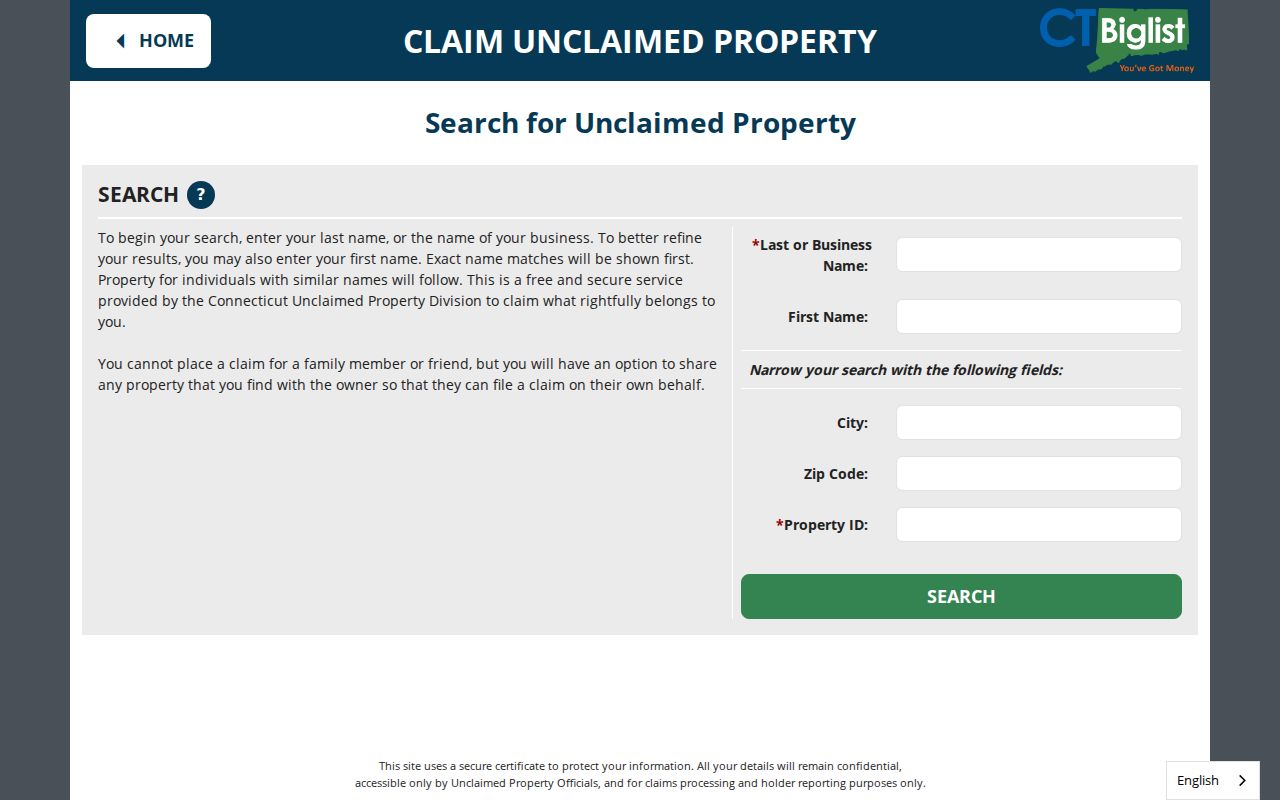
The CT Biglist capture is a route to a claim, not proof of a Meriden residence or current ownership.
Search a Meriden Block, Not a Household
The GIS Property Viewer can place an address on the parcel map, open its property, images, and building tabs, and let a researcher click the polygons beside it. A buffer or selected-record view can narrow a block snapshot, while the measure and print tools preserve a dated map note. The result is a set of parcels, owner fields, and building clues, not a list of everyone nearby.
Meriden’s Council of Neighborhoods adds civic geography. Its page and newsletters name groups such as Lewis Ave, North Meriden, Dutch Hill, ECHO, Downtown, Washington Park, South Meriden, Diamond Hill, City Park, Silver Lake, and Westfort Highlands. Those names help locate a meeting or a local issue, but the inspected sources do not publish member rosters or legal parcel boundaries. Police patrol sectors are a separate public-safety geography.
For a block question, keep the layers distinct: parcel and deed for property, voter records for lawful election context, planning notices for public projects, and neighborhood pages for civic contacts. Do not turn an area name into an assumption about who lives at a particular address.
What Meriden Records Do Not Prove
A tax mailing address may belong to an owner, trust, business, attorney, relative, or another out-of-town contact. The situs address identifies a building or parcel, not every occupant. A recorded deed establishes a transfer or interest, not a person’s current whereabouts. A directory entry identifies a listed household or boarder at a publication date, not legal title.
Several data sets are closed or limited. Connecticut DMV information is protected by the Driver’s Privacy Protection Act and Conn. Gen. Stat. §14-10. Utility and delivery records are not ordinary city FOI outputs. Protected voters can have actual addresses suppressed under the Voter Registry Privacy Program or the Address Confidentiality Program. Courts can remove or withhold sealed, erased, juvenile, adoption, and protected-party material.
When a result is wrong, contact the originating custodian with the account, instrument, docket, or parcel number and identify the disputed field. A non-match can mean an index gap, spelling variant, protected record, or retention rule. It does not settle a person’s identity by itself.
When the Meriden Web Route Stops
Interactive systems are useful, but a missing screen does not mean a missing record. The City Clerk keeps land instruments permanently in paper and digital form, even though the NewVision online back-year was not exposed. The Meriden OpenGov shell needs an account or live interaction for many requests. Planning, Building, and Engineering applications therefore need an office or records request when no public result table appears.
Connecticut’s Freedom of Information Act, Conn. Gen. Stat. §§1-200–1-242, allows any person to request existing public records subject to exemptions. The fee rule in §1-212 sets copy and certification limits, including municipal page rates and possible prepayment. A narrow request should state the record type, address or name, time range, desired format, and willingness to receive a redacted copy.
The fallback chain depends on the subject. Use the City Clerk for deeds and local vital records, the Superior Court clerk for a file or certified docket material, the Meriden Room for directories and film, the Historical Society for maps and occupant research, and the Connecticut State Library or Archives for older statewide material. Each custodian can explain its own coverage better than a search engine can.
Read Connecticut FOI guidance before asking an office to search beyond the records it maintains.
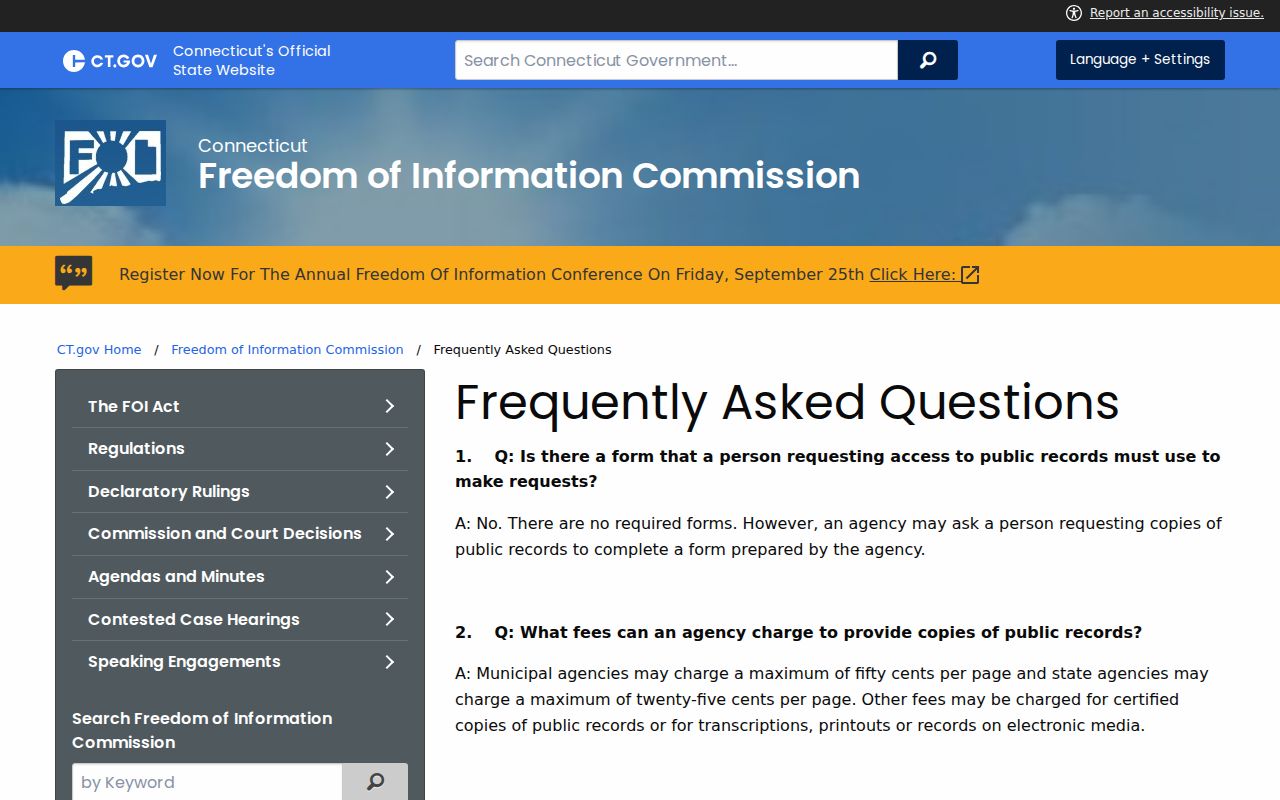
The FOI image belongs at the end of the online-search path, where a request becomes the next practical access channel.
Historical Meriden Resident Directories
Meriden’s strongest long-run resident source is the Public Library’s City Directory collection, covering 1868 through 1992. The books list residents, streets, and businesses. Price & Lee volumes from the 1880s and the 1909 bibliographic record add searchable historical detail, including a map, street directory, general citizen section, business directory, and indexes. The local run is the place to start when a name or address belongs to the printed era.
A directory can show a person’s name, occupation, employer shorthand, street, home or boarding marker, and a cross-reference. It cannot prove ownership or current residence. The Meriden Room, Historical Society, newspaper film, Sanborn maps, Barbour index, census, and obituaries let a researcher compare a year rather than rely on one line. The fuller shelf and entry-reading method is in the Meriden city directory collections page.
Historical names also need local context. Meriden was taken from Wallingford in 1806, became a city in 1867, and consolidated town and city government in 1922. That timeline explains why an older record may use a different jurisdiction label even when the address is part of the same research trail.